
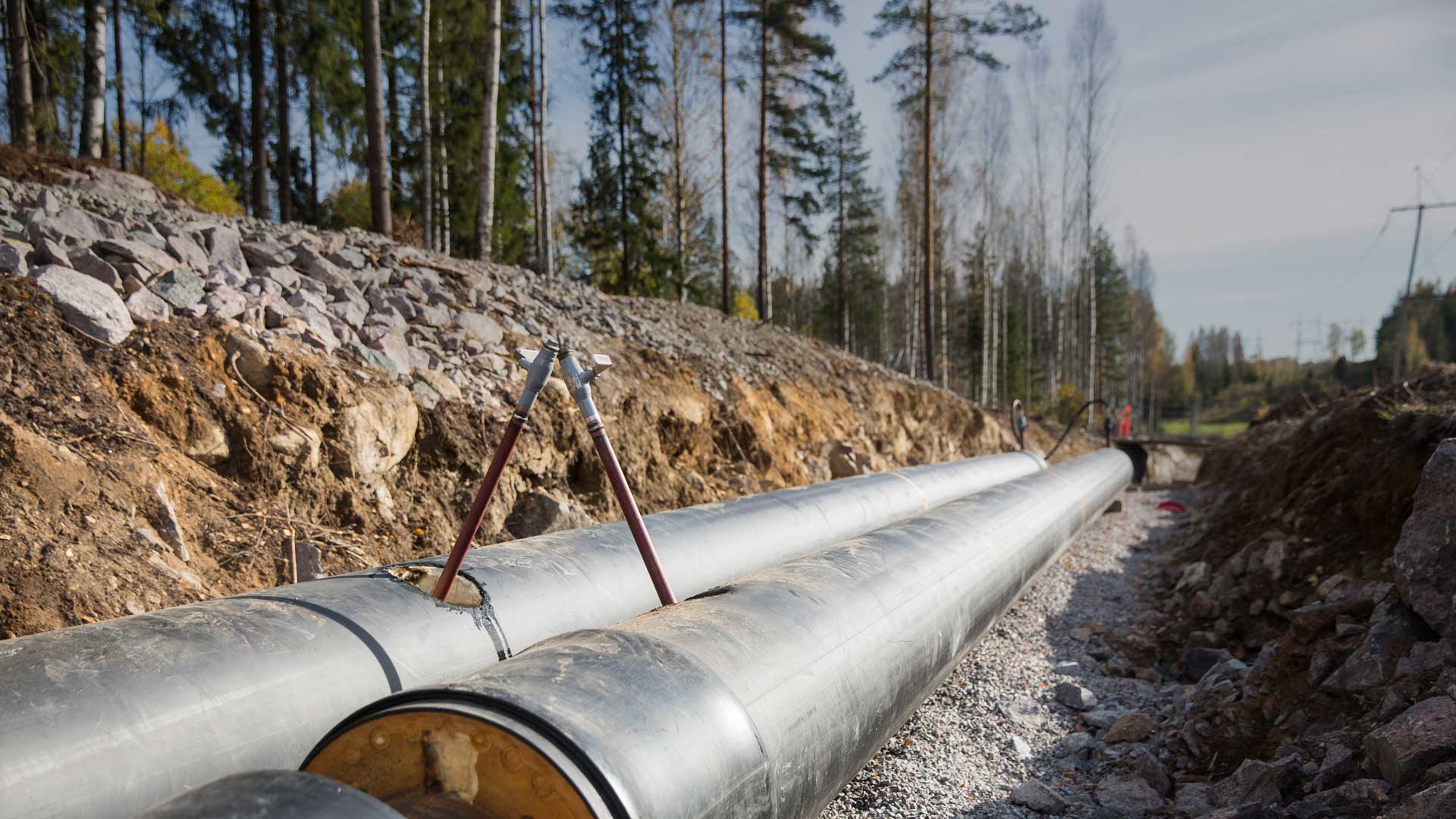
Connecting to district heating
All types of properties can be connected to district heating – including both new buildings and existing houses that are switching their heating method. Connection is easiest if the building already has a water- or air-based heating system.
How do I connect to district heating?
A building to be connected to the district heating network is classified as a “small-scale connection” (pientaloliittymä) if its volume is no more than 1,000 m³ and it contains a maximum of two residential units. We are continuously expanding our district heating network in response to demand, so please get in touch even if your street is not yet covered by the network.
Steps for connecting to district heating
1. Check availability
Our district heating networks cover almost the entire Kerava area, as well as the Nikkilä and Söderkulla town centers and Sipoonranta in Sipoo.
Ask us about network coverage:
2. Ask for a quote
Request a quote for district heating by filling out the form. Please fill in the form as comprehensively as possible so that we can provide a reliable quote quickly.
3. Assessment of the installation site
An HVAC plan is required for connecting to the district heating network. We can prepare it for you, or you can obtain it yourself.
If you obtain the plan yourself, please submit it to us for review well in advance of the installation work.
4. Signing of the heat supply agreement
- A written district heating agreement is always drawn up for connecting a property to the district heating network.
- The agreement specifies the heat delivery point, the start date, the building volume, and the connection fee.
- The terms and conditions for district heating connection and heat supply, as well as the price list, are attached to the agreement.
Joining fee
The connection fee for small residential buildings is a fixed amount that includes 20 meters of connection piping on the property; any length exceeding this is subject to an additional charge. The connection fee is determined based on the contracted water flow rate. The district heating water flow is directly proportional to the power required for the property’s heating and the production of domestic hot water.
In exchange for the connection fee, we construct the connection piping to the customer’s property and supply and install the heat metering equipment. The district heating substation (heat exchanger unit) and its installation are not included in the standard delivery. The connection fee is invoiced once the connection has been provided.
It is possible to claim a household tax deduction for the labor costs associated with renewing a heating system.
Heat release point
The heat distribution room should preferably be located against the wall closest to the street. The dimensions of the heat distribution room and the placement of equipment must comply with the guidelines provided by Finnish Energy (Energiateollisuus ry). The service connection line should be routed to the heat distribution room via the most direct path possible.
- During the construction of the foundations for a new building, pre-installation elbows for the district heating system are delivered to the site upon request.
- In an existing building, the heat distribution room is generally located in the property’s former boiler room.
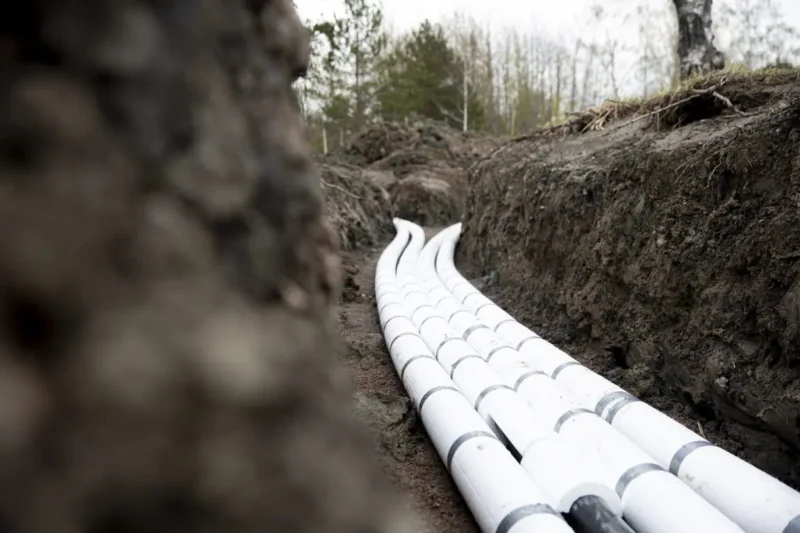
Construction
Once the heat supply agreement has been signed, earthworks and installation work will commence. Additionally, district heating equipment must be procured separately. The customer may arrange for the earthworks, equipment, and installation independently or order them from us as a turnkey service.
Only approved heating contractors are permitted to carry out installation, repair, and modification work on district heating equipment. This restriction does not apply to thermal insulation or electrical work. Instructions and regulations regarding the installation of district heating equipment are set out in the heating contractor regulations issued by Finnish Energy (Energiateollisuus ry).
district heat
District heat as a turnkey service
We also provide district heating connections on a turnkey basis. In such cases, we manage every stage of the project on behalf of our customers, including equipment sizing, installation, inspections, and commissioning.
If needed, we also take care of dismantling the old oil boiler, as well as cleaning and properly disposing of the old oil tank in accordance with environmental regulations.
Inspections and commissioning
Once the equipment installation is complete, we conduct a commissioning inspection of the district heating equipment. This inspection verifies, among other things, that the installation work has been carried out according to the plans and that the control equipment is operational. A pressure test in compliance with pressure vessel regulations is also performed during the inspection. Heat supply commences following a successful commissioning inspection.
A final inspection is carried out once the installation work is complete. Approval of the final inspection requires that the control equipment has been adjusted, installation waste has been cleared away, access to the heat distribution room has been arranged, any deficiencies noted during the commissioning inspection have been rectified, etc. For new buildings, the final inspection must be conducted prior to the building’s final official inspection.
During the final inspection—or at a separately agreed time—a representative of the property is instructed on the necessary operating and monitoring procedures for the district heating equipment. Regarding the customer’s equipment, this instruction is provided by the heating contractor.
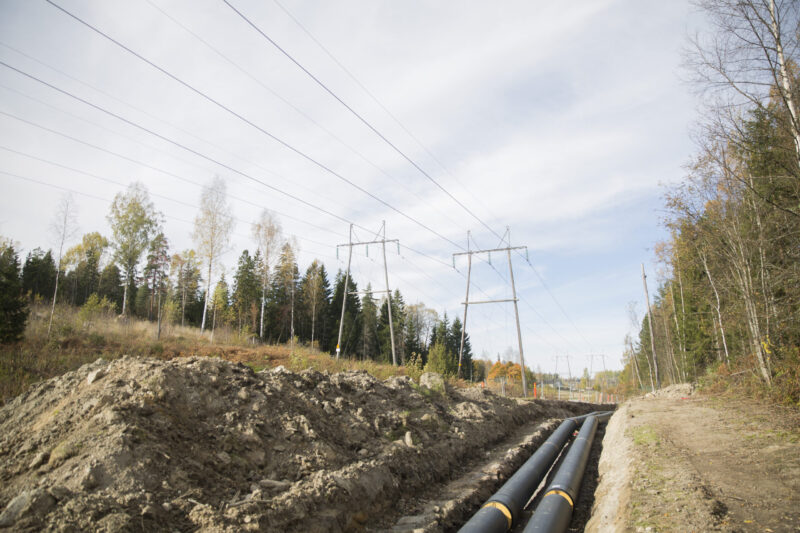
Heat measurement and billing
The district heating used in the property is billed monthly based on meter readings. The remote thermometers can be read remotely and the consumption readings are automatically included in the billing, and the customer does not need to send the readings separately.
The basic fee is invoiced in connection with the consumption fee in equal monthly installments.